Wild Cherries — Small Trees with Big Ecological Impact
If oaks are the anchors and willows the early bloomers, native cherries (Prunus spp.) are the bridge between spring and summer abundance. Their blossoms feed pollinators, their leaves sustain caterpillars, and their fruit feeds birds and mammals — all within one small, graceful tree.
The Ecological Power of Prunus
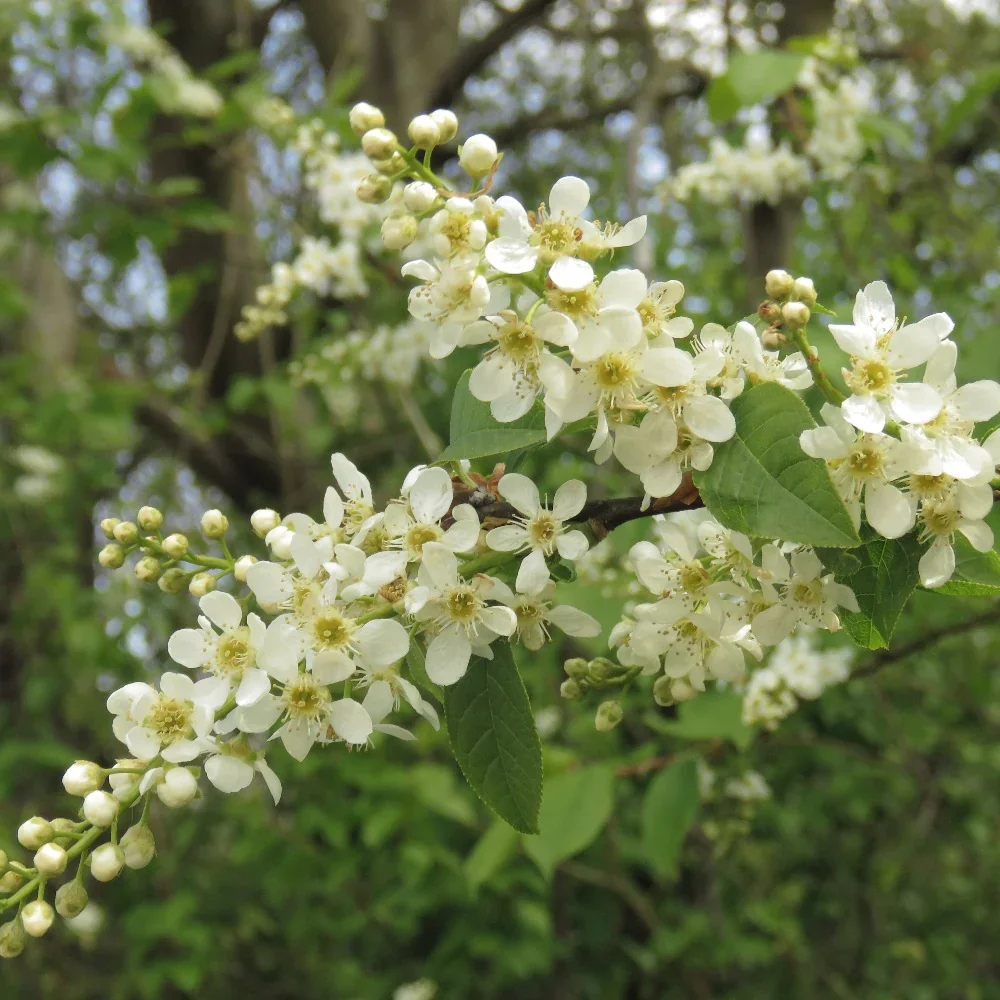
Studies from the University of Massachusetts show that Prunus species rank among the top native hosts for Lepidoptera larvae — often supporting over a hundred species in the Northeast. In fact, a 2025 experimental study found that native black cherry (Prunus serotina) supported far more caterpillar survival and growth than non-native ornamental relatives like P. laurocerasus or P. serrulata.
Why Cherries Support So Much Life
Native cherries evolved with local insects that have adapted to their specific leaf chemistry and seasonal patterns. The result? Healthy populations of tiger swallowtails, red-spotted purples, and other butterflies that rely on Prunus as larval hosts. Later in the season, ripening fruits attract cedar waxwings, thrushes, and foxes, continuing the energy cycle.
Cherries in Sustainable Design
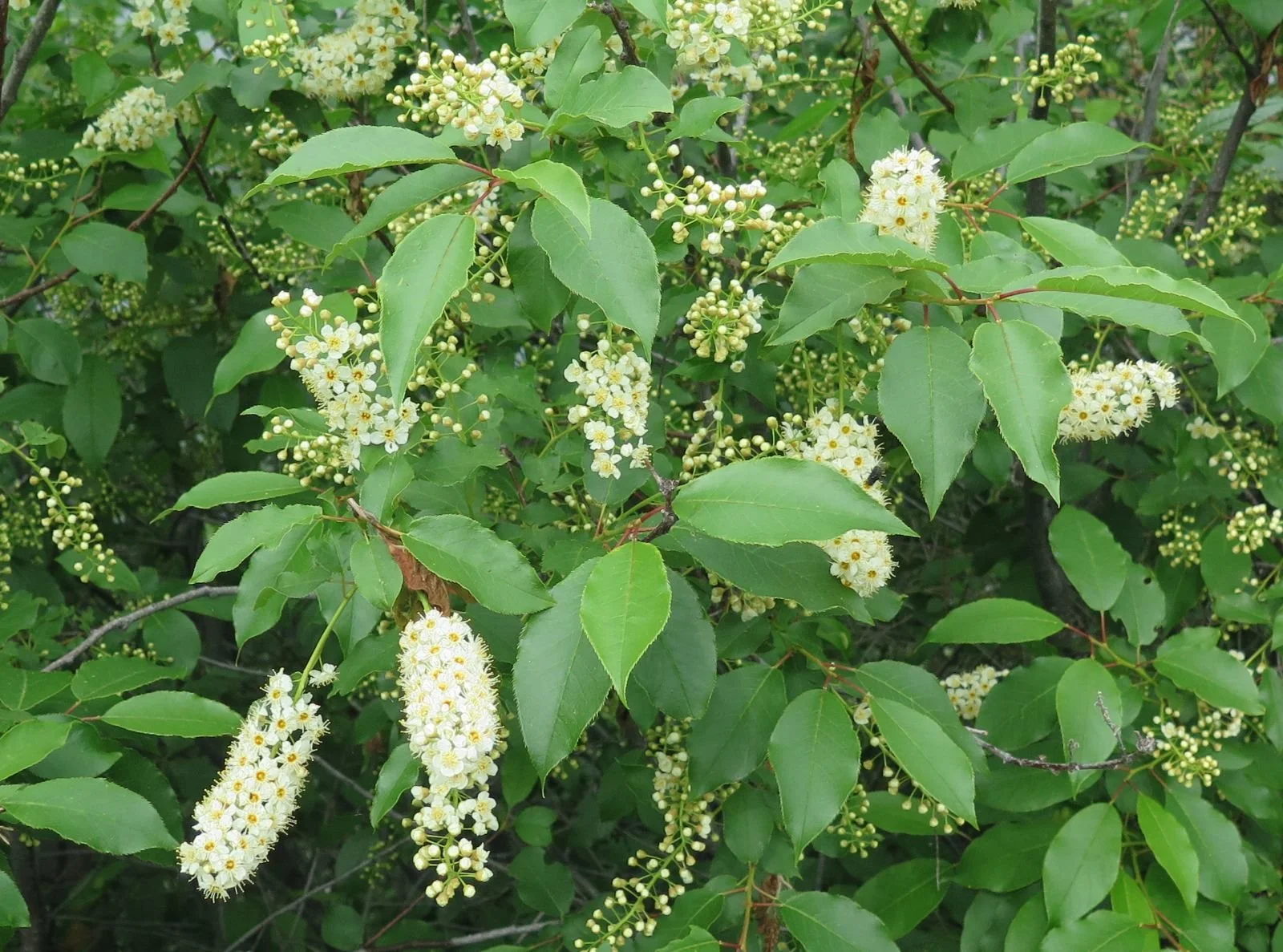
Wild cherries are ecologically beneficial, low-maintenance, and beautiful. Their diverse communities of pollinators and frugivores naturally balance pests and enhance soil fertility, reducing the need for fertilizers or sprays. In mixed native plantings, they serve as a midstory layer — bridging canopy trees and understory shrubs while connecting the pollinator and bird food webs.
Best Native Cherries for Northern New Jersey
Black cherry (Prunus serotina) – Tall, fast-growing, and excellent for wildlife.
Pin cherry (Prunus pensylvanica) – Early successional tree ideal for open or disturbed sites.
Chokecherry (Prunus virginiana) – A beautiful, adaptable small tree or large shrub with dense spring blooms.
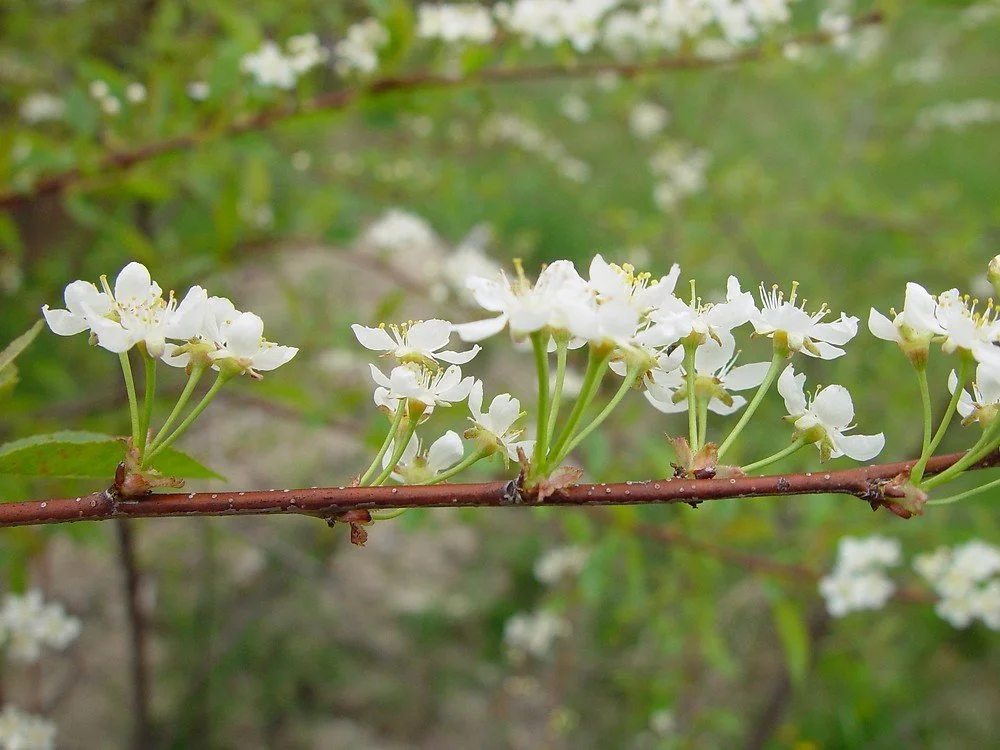
Connecting to Pollinator Gardens
Incorporating native Prunus adds nectar for bees, host plants for butterflies, and fruit for birds, all in one species. Their high wildlife value and adaptability make them perfect companions for native perennials like Monarda, Echinacea, and Solidago, creating truly self-sustaining gardens that thrive without heavy maintenance.